
May
Night Watchman
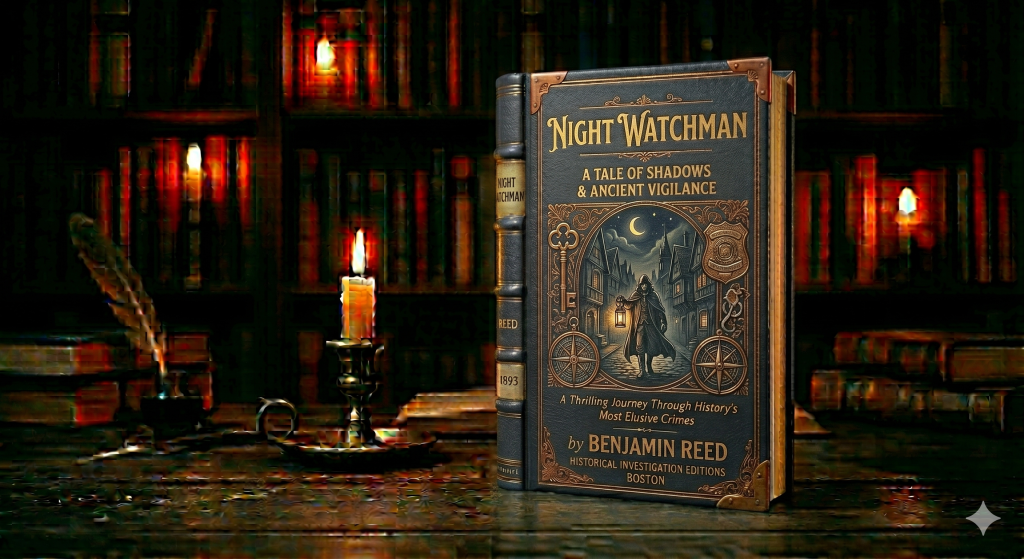
Night Watchman – Guardians of the Darkness and the Secrets It Hides

At its heart, Night Watchman tells the story of Thomas Hale, a former police officer who now works as a night security guard in a sprawling commercial complex on the outskirts of the city. Once a decorated officer known for his sharp instincts, Thomas left the force under unclear circumstances following an incident that continues to haunt him. Now, he spends his nights walking empty corridors, watching security monitors, and trying to maintain a sense of normalcy in a life that has been quietly fractured.

The setting of the novel plays a crucial role in establishing its tone. The commercial complex—silent, dimly lit, and seemingly lifeless after dark—becomes a world of its own. Offices that buzz with activity during the day turn into hollow shells at night. Elevators hum without purpose, shadows stretch unnaturally along walls, and every sound echoes louder than it should. The environment is both mundane and unsettling, creating an atmosphere where anything can happen—and often does.

Thomas’s job appears simple: monitor the premises, ensure that everything remains secure, and report any irregularities. But from the very beginning, it becomes clear that something is not quite right. Small anomalies begin to surface—doors that should be locked are found slightly ajar, security cameras flicker without explanation, and faint noises echo from parts of the building that should be empty.
At first, Thomas attributes these occurrences to routine malfunctions or his own heightened sensitivity. After all, working alone at night can play tricks on the mind. But as the incidents become more frequent and increasingly difficult to explain, he begins to suspect that there is something more sinister at play.
What sets Night Watchman apart is its slow-building tension. Rather than relying on immediate shocks, the novel carefully constructs a sense of unease. Each strange occurrence adds another layer to the mystery, drawing both Thomas and the reader deeper into the unknown. The pacing allows for a gradual escalation, making the eventual revelations all the more impactful.
Thomas Hale is a deeply complex protagonist, shaped by his past and struggling to find his place in the present. His decision to leave the police force is gradually revealed through flashbacks, offering glimpses into the incident that changed his life. This event—marked by tragedy and unanswered questions—continues to influence his actions and perceptions.
His work as a night watchman is more than just a job; it is a form of escape. The solitude allows him to avoid confronting his past, while the routine provides a sense of control. However, as the strange events within the building intensify, Thomas is forced to engage with the very instincts he has tried to suppress.
The novel delves deeply into the psychological effects of isolation. Spending long hours alone in a silent environment begins to blur the boundaries between reality and imagination. Thomas’s thoughts become increasingly introspective, his mind revisiting old memories and unresolved guilt. The darkness around him mirrors the darkness within, creating a powerful connection between setting and character.
Supporting characters, though limited in physical presence, play significant roles in shaping the narrative. There is Mr. Calloway, the building manager, whose dismissive attitude toward Thomas’s concerns raises suspicion. His insistence that everything is functioning normally contrasts sharply with the evidence Thomas observes, suggesting that he may be hiding something.
Another key figure is Elena Ruiz, a cleaning staff member who works late shifts. Unlike others, she acknowledges the strange occurrences and shares her own experiences within the building. Her perspective adds credibility to Thomas’s suspicions, and their interactions provide moments of human connection in an otherwise isolating environment.
As Thomas begins to investigate the anomalies, he uncovers fragments of the building’s history—incidents that were never fully explained, employees who left under mysterious circumstances, and records that seem incomplete or altered. These discoveries suggest that the building itself holds secrets that have been deliberately concealed.
The narrative skillfully weaves together past and present, revealing how previous events continue to influence current happenings. The concept of the building as a repository of hidden truths adds a layer of intrigue, transforming it from a simple setting into a central element of the story.
One of the most compelling themes in Night Watchman is the idea of vigilance—not just as a physical act, but as a mental and emotional state. Thomas’s role requires him to observe, to notice details that others might overlook. This heightened awareness becomes both his greatest strength and his greatest burden.
The novel also explores the notion of truth and how it can be obscured or manipulated. As Thomas digs deeper, he encounters conflicting information and deliberate misinformation. Determining what is real becomes increasingly difficult, forcing him to rely on his instincts—a skill he once trusted but now questions.
The tension reaches a critical point when Thomas witnesses an घटना (event) that cannot be explained by any logical means. This moment serves as a turning point, pushing him from passive observation into active confrontation. No longer content to simply watch, he decides to uncover the truth, regardless of the consequences.
The climax of the novel is both intense and thought-provoking. As the layers of mystery are peeled back, the true nature of the building—and the forces at work within it—begins to emerge. The confrontation that follows is not just physical, but psychological, challenging Thomas to face his fears and the guilt he has long carried.
The resolution of Night Watchman is carefully balanced, providing answers while leaving certain elements open to interpretation. This ambiguity enhances the story’s impact, allowing readers to reflect on the events and draw their own conclusions.
The writing style is evocative and immersive, with a strong emphasis on atmosphere. Descriptions of the ночная тишина (night silence), the flickering lights, and the subtle shifts in environment create a vivid sensory experience. The author’s attention to detail ensures that every scene feels real and immediate.
In addition to its suspenseful narrative, Night Watchman offers deeper reflections on themes such as responsibility, redemption, and the human need for closure. Thomas’s journey is not just about solving a mystery—it is about confronting his past and finding a way to move forward.
Ultimately, Night Watchman is a story about those who stand watch when others cannot—or will not. It is about the unseen guardians who protect not just physical spaces, but the fragile boundary between order and chaos. Through its compelling characters, atmospheric setting, and layered narrative, the novel delivers a powerful and unforgettable reading experience.
In conclusion, Night Watchman stands as a remarkable work of suspense fiction, blending mystery, psychological depth, and emotional resonance. It captures the essence of what it means to face the unknown, to remain vigilant in the face of uncertainty, and to seek truth even when it lies hidden in the darkest corners.
Because sometimes, the most important role is not to act—but simply to watch… and to understand what others fail to see.
