
Post
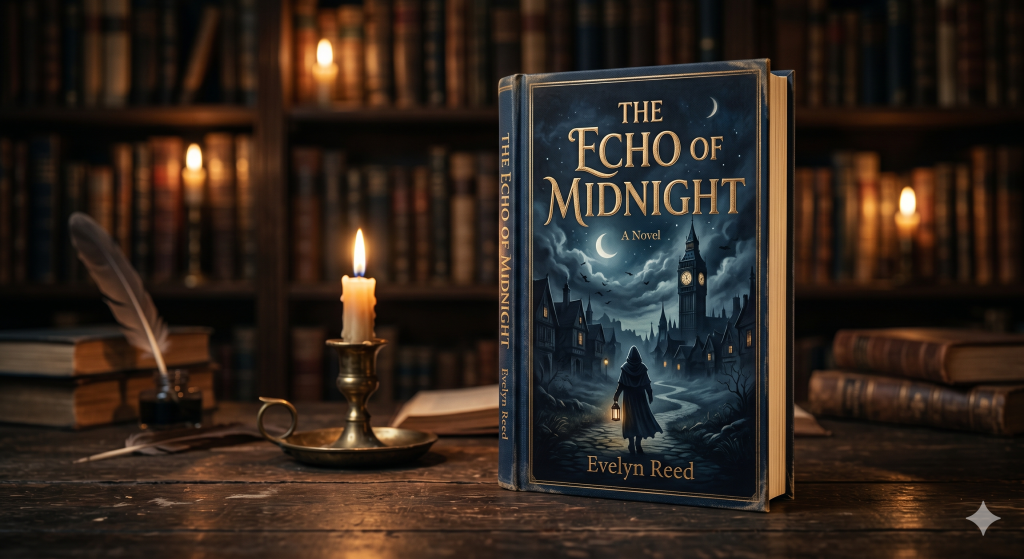
The Echo of Midnight
May
The Echo of Midnight
The Echo of Midnight – A Deep Dive into Mystery, Memory, and the Shadows Within
In the vast landscape of modern literature, few titles evoke intrigue and emotional resonance as powerfully as The Echo of Midnight. The very name suggests a story rooted in darkness, reflection, and the lingering whispers of the past. This book is more than just a narrative—it is an immersive journey into the human psyche, where secrets refuse to remain buried and the quiet hours of the night amplify truths we often try to ignore.
This article explores The Echo of Midnight in depth, analyzing its themes, characters, narrative structure, emotional impact, and the reasons why it stands out as a compelling piece of storytelling.
Introduction: When Silence Speaks Loudest
Midnight has always been a symbolic hour—an intersection between endings and beginnings, between conscious thought and subconscious truth. In The Echo of Midnight, this symbolism is used masterfully to frame a story that is both haunting and deeply human.
The novel centers around the idea that memories, no matter how deeply suppressed, have a way of resurfacing. Much like echoes, they may fade over time but never truly disappear. Instead, they return—distorted, fragmented, yet undeniably powerful.
From the very first chapter, readers are drawn into a world where time feels fluid, where past and present intertwine, and where every silence hides a story waiting to be heard.
Plot Overview: A Journey Through Darkness
At its core, The Echo of Midnight follows the life of a protagonist who is haunted—not by supernatural forces, but by their own past. The story unfolds in a quiet town that seems ordinary on the surface but carries an undercurrent of mystery.
The protagonist returns to this town after years of absence, triggered by an event that forces them to confront unresolved issues. As the narrative progresses, layers of hidden truths begin to unravel. What initially appears to be a simple return home evolves into a complex investigation of memory, guilt, and identity.
The story is structured in a nonlinear fashion, shifting between timelines. These transitions are seamless, allowing readers to slowly piece together the puzzle. Each chapter reveals fragments of the past, building tension and emotional depth.
By the time the climax arrives, the reader is fully immersed in the protagonist’s internal struggle. The resolution is not just about solving a mystery—it is about understanding oneself.
Themes: The Heart of the Story
1. Memory and Its Distortions
One of the most prominent themes in The Echo of Midnight is memory. The novel explores how memories are not always reliable. They change over time, influenced by emotions, guilt, and perspective.
The protagonist’s recollections often conflict with reality, creating a sense of uncertainty. This theme resonates deeply because it reflects a universal truth—our understanding of the past is never absolute.
The book challenges readers to question their own memories. Are they accurate reflections of events, or are they shaped by what we wish to believe?
2. Guilt and Redemption
Guilt plays a central role in the narrative. The protagonist is burdened by a past event that continues to affect their present life. This guilt manifests in various ways—through nightmares, fragmented thoughts, and an inability to move forward.
However, the story is not solely about suffering. It also explores the possibility of redemption. Through self-discovery and confrontation, the protagonist begins to understand that healing is possible, even if it requires facing painful truths.
This theme adds emotional weight to the story, making it both relatable and impactful.
3. The Passage of Time
Time in The Echo of Midnight is not linear. The narrative moves fluidly between past and present, emphasizing how closely connected they are.
The book suggests that time does not erase experiences—it merely layers them. The past continues to influence the present, shaping decisions and perceptions.
This concept is reinforced through the storytelling style, which mirrors the way memory works—fragmented, nonlinear, and deeply personal.
4. Isolation and Connection
Despite being surrounded by people, the protagonist often feels isolated. This emotional distance highlights the difficulty of truly connecting with others when one is burdened by unresolved issues.
At the same time, the story emphasizes the importance of connection. Relationships—whether with family, friends, or even strangers—play a crucial role in the protagonist’s journey toward understanding and acceptance.
Character Development: A Psychological Exploration
The Protagonist
The protagonist of The Echo of Midnight is a deeply complex character. They are not portrayed as a hero or a villain, but as a flawed individual navigating their own inner turmoil.
Their journey is primarily internal. While external events drive the plot forward, the true conflict lies within their mind. This psychological depth makes the character highly relatable.
Readers witness their transformation—from avoidance and denial to acceptance and growth. This evolution is gradual and believable, adding authenticity to the story.
Supporting Characters
The supporting characters in the novel are equally significant. Each one represents a different aspect of the protagonist’s past and present.
Some characters serve as reminders of what once was, while others act as catalysts for change. Their interactions with the protagonist reveal hidden layers of the story, contributing to the overall narrative.
These characters are not merely background figures—they are essential pieces of the puzzle.
Narrative Style: A Unique Storytelling Approach
One of the most striking aspects of The Echo of Midnight is its narrative style. The author employs a combination of descriptive prose, introspective passages, and fragmented storytelling.
Atmospheric Writing
The descriptions in the novel are vivid and immersive. The setting is brought to life through detailed imagery, creating a sense of place that feels both real and surreal.
Nighttime scenes, in particular, are crafted with precision. The quiet, almost eerie atmosphere enhances the emotional intensity of the story.
Nonlinear Structure
The nonlinear structure adds depth and complexity to the narrative. Instead of presenting events in chronological order, the story unfolds in layers.
This approach mirrors the way memories surface—unexpectedly and often out of sequence. It also keeps readers engaged, encouraging them to actively piece together the story.
Symbolism
Symbolism is used extensively throughout the novel. Midnight itself serves as a recurring motif, representing both darkness and revelation.
Other symbols—such as echoes, shadows, and reflections—reinforce the themes of memory and identity. These elements add richness to the narrative, making it more than just a straightforward story.
Emotional Impact: A Story That Stays With You
What truly sets The Echo of Midnight apart is its emotional resonance. The story does not rely on dramatic twists alone—it builds a deep emotional connection with the reader.
The exploration of guilt, memory, and self-discovery creates moments that are both heartbreaking and uplifting. Readers may find themselves reflecting on their own experiences, making the story feel personal.
The ending, while not entirely conventional, is satisfying. It provides closure without oversimplifying the complexities of the narrative.
Why This Book Stands Out
In a market saturated with thrillers and psychological dramas, The Echo of Midnight distinguishes itself through its depth and authenticity.
1. A Focus on Internal Conflict
Unlike many stories that prioritize external action, this novel centers on internal struggle. This makes it more introspective and emotionally engaging.
2. Realistic Portrayal of Human Emotion
The characters’ emotions are portrayed with honesty and nuance. There are no exaggerated reactions—only genuine, relatable experiences.
3. Thought-Provoking Themes
The themes explored in the book are universal yet deeply personal. They encourage readers to reflect on their own lives and perceptions.
4. A Memorable Atmosphere
The setting and tone of the novel create a lasting impression. Even after finishing the book, readers may find themselves thinking about its scenes and messages.
Conclusion: The Echo That Never Fades
The Echo of Midnight is more than just a story—it is an experience. It invites readers to step into a world where the past is never truly gone, where silence speaks volumes, and where the journey toward understanding oneself is both painful and necessary.
Through its intricate narrative, compelling characters, and powerful themes, the book leaves a lasting impact. It reminds us that while we may try to escape our past, it remains a part of us—shaping who we are and who we become.
In the end, the “echo” in The Echo of Midnight is not just a metaphor—it is a reflection of the human condition. It is the lingering presence of memories, emotions, and truths that refuse to be forgotten.
And perhaps that is what makes this novel so unforgettable.
