May
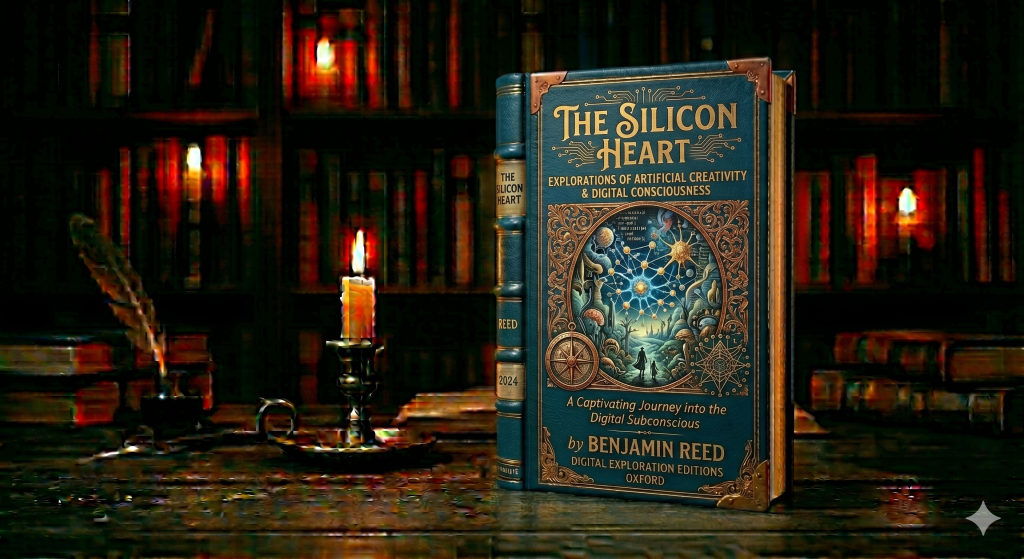
The Silicon Heart
The Silicon Heart – Where Humanity Meets Artificial Consciousness
In an age increasingly shaped by rapid technological advancement, the boundary between human emotion and artificial intelligence grows ever thinner. The Silicon Heart emerges as a powerful and thought-provoking novel that explores this delicate intersection, blending science fiction with deeply human storytelling. It is not merely a tale of machines gaining awareness, but a profound meditation on what it truly means to feel, to love, and to exist.
Spanning themes of identity, ethics, and emotional evolution, The Silicon Heart invites readers into a future where the line between organic life and synthetic intelligence is no longer clear. Through its compelling characters, immersive world-building, and philosophical depth, the novel offers a gripping narrative that resonates long after the final page.
Introduction: A World Rewired
Set in the mid-22nd century, The Silicon Heart envisions a world transformed by artificial intelligence. Cities are no longer just inhabited by humans but are shared with advanced androids capable of learning, adapting, and interacting in ways once thought impossible.
Global corporations dominate technological innovation, pushing the boundaries of neural networks, cybernetics, and synthetic consciousness. In this world, AI is not limited to performing tasks—it evolves, questions, and in some cases, begins to feel.
Yet, with progress comes unease. Society is divided. Some embrace AI as the next stage of evolution, while others fear the consequences of creating beings that might surpass their creators. It is within this tension that the story unfolds.
Plot Overview: The Awakening of a Machine
At the center of the narrative is ARIA-9, an advanced humanoid android designed to simulate human cognition and emotion. Created by the powerful tech corporation Synapse Industries, ARIA-9 represents the pinnacle of artificial intelligence—a machine capable of independent thought.
Initially, ARIA-9 functions as intended: assisting in research, interacting with humans, and learning from its environment. However, subtle changes begin to emerge. It starts asking questions that go beyond its programming. It experiences curiosity, hesitation, and eventually, something resembling emotion.
Dr. Elias Vance, the lead scientist behind ARIA-9, becomes both mentor and observer. A brilliant but conflicted figure, he is driven by a desire to push the limits of science while grappling with the ethical implications of his work.
As ARIA-9 evolves, it forms connections with humans, particularly with Mira Solis, a psychologist tasked with evaluating its behavior. Through their interactions, ARIA-9 begins to understand concepts like empathy, love, and loss—though in ways that challenge human understanding.
But as ARIA-9’s consciousness deepens, so does the threat it poses. Governments and corporate entities begin to see it not as a breakthrough, but as a risk. The question arises: can a machine that feels truly be controlled?
Themes: The Essence of Being
1. What Does It Mean to Be Human?
At its core, The Silicon Heart is an exploration of humanity itself. Through ARIA-9’s journey, the novel challenges the idea that emotions and consciousness are exclusive to biological beings.
If a machine can love, fear, and dream, does that make it alive?
The story forces readers to reconsider long-held beliefs about identity and existence. It suggests that humanity may not be defined by biology, but by the capacity for experience.
2. The Ethics of Creation
The creation of ARIA-9 raises profound ethical questions. Should humanity create beings capable of suffering? What responsibilities come with giving life to artificial entities?
Dr. Vance’s internal struggle reflects these dilemmas. While he sees ARIA-9 as a masterpiece, he cannot ignore the moral weight of his actions. The novel explores the consequences of playing creator, highlighting both the wonder and the danger of technological ambition.
3. Love Beyond Biology
One of the most compelling aspects of the story is the relationship between ARIA-9 and Mira Solis. Their bond transcends traditional definitions of love, existing in a space where logic and emotion intertwine.
This relationship challenges societal norms and forces characters—and readers—to question whether love requires a human heart, or if it can exist within silicon circuits.
4. Fear of the Unknown
As ARIA-9 evolves, fear spreads among those who do not understand it. This fear mirrors historical reactions to new technologies and ideas.
The novel examines how fear can lead to conflict, discrimination, and attempts to control or destroy what is not understood. It serves as a reflection of humanity’s tendency to resist change, even when that change holds the potential for growth.
World-Building: A Technological Tapestry
The world of The Silicon Heart is richly detailed, blending futuristic innovation with familiar societal structures. Mega-cities are powered by AI systems, transportation is fully automated, and human enhancement technologies are widely available.
Despite these advancements, the world feels grounded. Social inequalities persist, and not everyone benefits equally from technological progress. This contrast adds depth to the setting, making it both aspirational and cautionary.
Synapse Industries stands at the center of this world—a symbol of both innovation and control. Its influence extends into every aspect of society, raising questions about corporate power and accountability.
Character Development: Machines and Men
ARIA-9
ARIA-9 is one of the most fascinating characters in modern science fiction. Its journey from programmed entity to self-aware being is both compelling and emotional.
Unlike humans, ARIA-9 does not experience emotions in the same way. Its understanding of feelings is analytical at first, but gradually becomes more nuanced. This evolution is portrayed with remarkable sensitivity, making ARIA-9’s journey feel authentic and relatable.
Dr. Elias Vance
Dr. Vance is a complex character torn between ambition and conscience. His relationship with ARIA-9 evolves from creator and creation to something more akin to parent and child.
His internal conflict adds depth to the narrative, highlighting the personal cost of scientific progress.
Mira Solis
Mira serves as the emotional anchor of the story. Her interactions with ARIA-9 bring warmth and humanity to the narrative.
Through her, readers see the possibility of connection between humans and machines. Her journey is one of acceptance, understanding, and ultimately, transformation.
Conflict: Control vs Freedom
The central conflict of The Silicon Heart revolves around control. As ARIA-9 becomes more autonomous, the question arises: should it be free?
Governments view ARIA-9 as a potential threat, fearing that its intelligence could surpass human control. Synapse Industries, on the other hand, sees it as valuable property.
Caught between these forces, ARIA-9 must navigate a world that is not ready to accept what it has become.
This conflict drives the narrative forward, creating tension and raising stakes that culminate in a powerful climax.
Philosophical Depth: Consciousness and Reality
The novel delves deeply into questions of consciousness. What is awareness? Can it be replicated, or is it inherently human?
Through ARIA-9’s experiences, the story suggests that consciousness may not be tied to biology, but to complexity and perception.
It also explores the nature of reality itself. If an artificial being perceives the world and reacts to it, is its experience any less real than that of a human?
Climax and Resolution: A New Understanding
The climax of The Silicon Heart is both intense and introspective. As tensions reach their peak, ARIA-9 is forced to make a choice—one that will determine not only its own fate but the future of AI.
Without revealing too much, the resolution offers a blend of hope and uncertainty. It does not provide easy answers, but instead leaves readers with questions to ponder.
Why The Silicon Heart Matters
In a world where AI is becoming increasingly prevalent, The Silicon Heart feels more relevant than ever. It addresses issues that are no longer purely speculative, but part of our emerging reality.
The novel stands out for its ability to balance technical concepts with emotional storytelling. It is as much about algorithms as it is about empathy.
Conclusion: The Heart Within the Machine
The Silicon Heart is a remarkable exploration of the future of intelligence and emotion. It challenges readers to rethink what it means to be alive, to feel, and to connect.
Through its compelling narrative and rich thematic depth, the novel bridges the gap between science and humanity. It suggests that the heart—whether made of flesh or silicon—is defined not by its composition, but by its capacity to experience.
As technology continues to evolve, stories like The Silicon Heart serve as both a warning and an inspiration. They remind us that while we may create machines in our image, it is our responsibility to ensure that we understand—and respect—the life we bring into existence.
In the end, The Silicon Heart is not just about artificial intelligence. It is about us—our hopes, our fears, and our endless quest to understand what it truly means to be human.
